
The NBA changed this week ... significantly
And now the clock starts ticking to determine if the NBA's latest burst of lottery reform was truly necessary ... or an overcorrection


The metaphorical ground beneath the NBA shook forcefully Thursday.
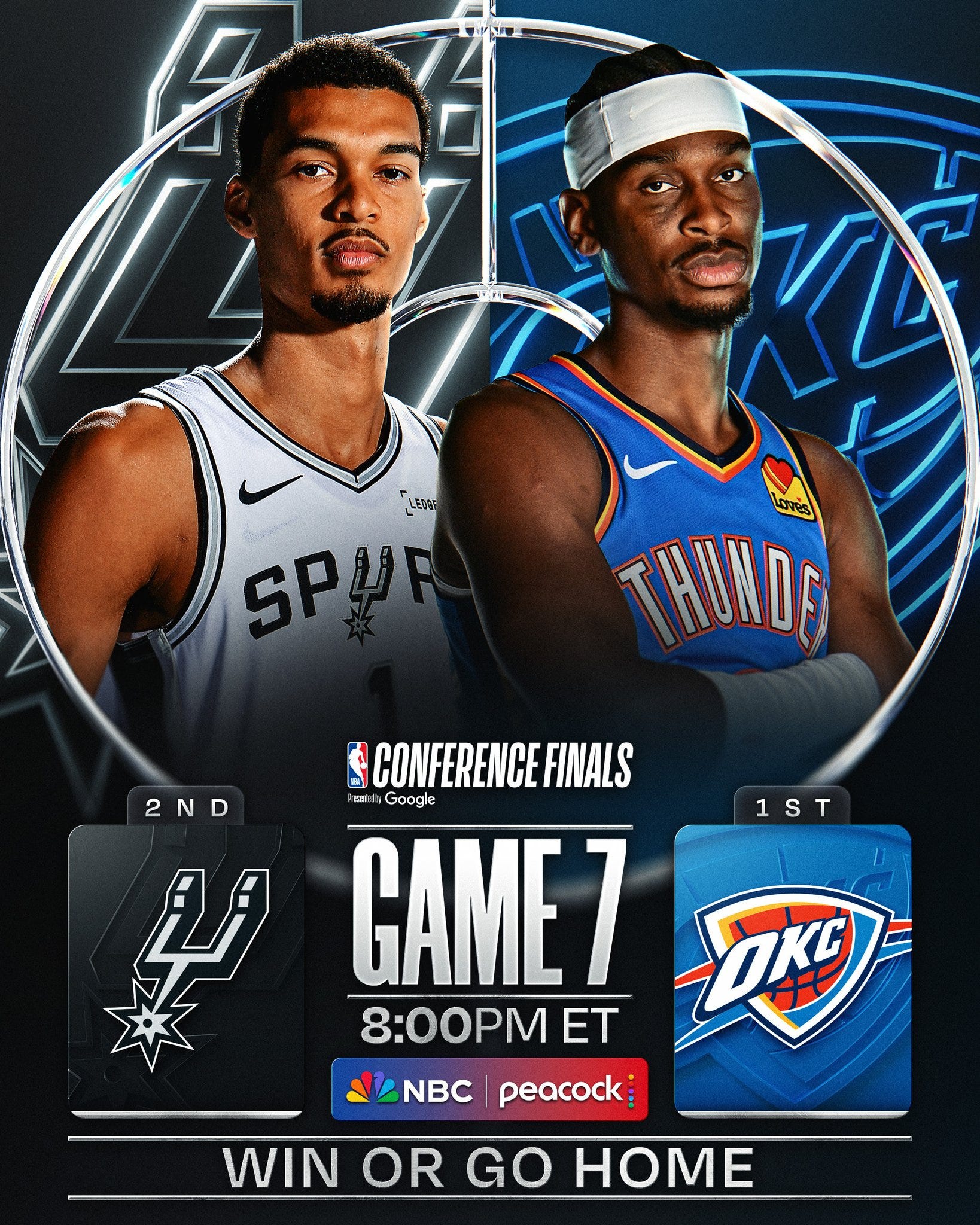
San Antonio forced a Game 7 in the Western Conference finals with withering third quarter defense that discombobulated the reigning champions from Oklahoma City. The New York Knicks' opponent in next week's NBA Finals thus won't be known until Saturday night's series-decider.


But first …
The NBA also ushered in significant lottery changes for next season to try to combat a tanking epidemic. The reform passed by a resounding vote of 29-1. Only the Memphis Grizzlies officially opposed the implementation of the NBA's new "3-2-1" system.
One inevitably suspects, though, that could be plenty of howling about how far these changes from the league office went once we actually see them in practice.


Some of the tweaks are undeniably promising. The prospect of being able to watch where each of the first 16 picks in the draft lands on live TV by way of 37 Ping Pong balls in total, compared to how the lottery order is conducted first in a sequestered room under the current system, is tantalizing. It also surely won't surprise you that this lifelong soccer devotee is highly intrigued by the introduction of the NBA's so-called relegation zone.
It's not actual relegation as seen over all the globe in world football, but Adam Silver's version — imposing less of a shot at the No. 1 overall pick on the three worst teams in the league compared to the teams with the fourth- through 10th-worst records as shown in the NBA-issued graphics above — could prove to be an inspired tweak.
It's a move which should ensure that teams at the very bottom will try harder than they have been trying to win games late in the season. Closing out an 82-game marathon on a 1-26 skid, like the Washington Wizards just did en route winning the rights to the No. 1 overall pick in this June's draft, will no longer be rewarded. Also key here: Three teams getting "draft relegated," as the league is officially calling it, means that the NBA is the first major team sport in North America to find a way to work relegation into its lexicon ... even if, again, it's not letter-of-the-law relegation.
Inspired indeed.
However …
You've also surely heard that the lottery changes ratified via Thursday's vote by the NBA's Board of Governors are only guaranteed to be in place for the next three seasons: 2026-27, 2027-28 and 2028-29.
The league is essentially telling us that it can't be sure that the new format is the best route forward.
The NBA's existing Collective Bargaining Agreement expires after the 2029-30 season and features a mutual opt-out clause after 2028-29, so "sunset" language has been weaved into the league's lottery overhaul to ensure that this array of tweaks will only be in place for three years. Consider it a testing period before long-lasting backing, or a movement to pursue further changes, is folded into the next round of labor talks.

The impact from these alterations, mind you, will be immediate. And significant.
Jake Fischer has been writing for weeks now about how teams out there are expected to be more reluctant to trade first-round picks in 2027, 2028 and 2029 if they think those picks have any shot to land in the late lottery. Picks from 4 through 10 in this new system — and quite possibly 11 through 16 — are likely to be more valuable than ever before.
Which means teams are presumably going to be more reluctant than ever before to part with them.
Is that what we want? Is that good for the NBA? Isn't modern team-building complicated enough? Significant trades could well be more difficult to complete going forward with draft picks sweetening offers to the fullest, which sounds rather ominous in a league where trades — rather than free agency — have by far become the most significant generator of difference-making player movement.
You can likewise certainly understand Memphis' dismay. The Grizzlies traded Jaren Jackson Jr. to the Jazz in February for a package that included Utah's first-round pick in 2027. The new rules, however, suddenly stipulate that Utah's pick can't land higher than sixth in the 2027 lottery because the Jazz have come away with top-five selections in the past two drafts. Why do the new rules affect draft picks that were traded under a previous system? Why is Memphis being punished for Utah's tanking? How is it fair to the Grizzlies that a pick they acquired three months ago has been retroactively downgraded with a top-five-protected stipulation that no one knew was coming when the trade was agreed?
Back to future trade activity: There's yet another potential stumbling block to consider. Suddenly no team knows how the lottery will function beyond the draft in 2029, which could make surrendering first-round picks further down the road even more uncomfortable than trading them in next three drafts. No one in the NBA — or, truthfully, any universe — relishes the unknown. One GM, in response to the uncertainty, had already told Jake before the vote: "I'm not trading any picks beyond 2029."
These are just a few potential issues. Tanking was an undeniable scourge this season, but it was also likely to decrease leaguewide anyway next season because the player pool for the 2027 draft is not projected to be nearly as deep as this one. So it's impossible to tune out the fears from various teams already in circulation that we will be coming away from Lottery Reform 2026 regarding it as an overcorrection.
At the very least: We're definitely going to need these next three years to truly evaluate the NBA's revamp.
All three of them.
The Stein Line is a reader-supported newsletter with both Free and Paid subscriptions available … and those who opt for the Paid edition are taking an active role in the reporting by providing vital assistance to bolster my independent coverage of #thisleague. Feel free to forward this post to family and friends interested in the NBA and please consider becoming a Paid subscriber to have full access to all of my posts.
As a reminder: Tuesday editions on this and every Newsletter Tuesday go out free to anyone who signs up … just as my Tuesday pieces did in their New York Times incarnation. Unless, that is, they are shifted to Friday (or Saturday) like this one.
Thanks for reading The Stein Line! This post is public so feel free to share it.
One more time ...
One more time for a piece Jake and I co-wrote Friday featuring considerable coverage about the Cavaliers' expensive future:
The NBA's latest potential coach, executive and player movement

Some pressing news updates from around the NBA after San Antonio forced a Game 7 in the Western Conference finals with a smothering home victory over the reigning champions from Oklahoma City … covering Orlando, Philadelphia, Cleveland and more:
And for Jake's excellent around-the-league notebook that published Wednesday with loads of Intel about lottery reform and next month's draft:
The latest chatter from the NBA Draft landscape

Wednesday night is an off night when it comes to the NBA playoffs thanks to New York swiftly brooming Cleveland away in four games.
And for my Monday Best around-the-league notes that went heavy on Giannis Antetokounmpo's future as well as Philadelphia's search for a new head of basketball operations:
Monday Best: The latest around-the-NBA Intel from an offseason that's heating up

Around-the-league NBA notes on a Monday?
(Substack) Note(s) of the Week
Declaration(s) of note via Substack Notes:
OK … and one from what the kids used to call Twitter:


Folks need to embrace uncertainty more. If the picks are potentially more valuable that should make them potentially more valuable in a trade too. So trades can happen with fewer picks because each pick is more valuable. The Pacers didn’t trade the fifth pick. They traded the fifth pick in exactly 48% of the multiverses and kept it in 52% of them. Quite reasonable.
Genuine question - how to the top pick and top 5 pick restrictions work in practice. Let’s say the Utah jazz ball, owned by Memphis, is picked first - does that become the 6th pick? Or does their ball go back in, and it has to wait to be drawn until after the first five picks are drawn?
And am I right that the new lottery draft inevitably has to show the first pick first, correct?